
What should be on your Delhi itinerary? A mix of history, architecture, faith, and everyday city life. This list covers ten places that show you Mughal forts, colonial-era streets, active temples and gurdwaras, and a neighbourhood that’s turned centuries-old ruins into a café scene. If you’re putting together a Delhi trip package, this is a solid starting point for deciding what actually goes into your days there. Whether you plan your Delhi itinerary through an agency or on your own, these are the places worth building your time around.
Why These 10 Delhi Attractions Are Worth Adding to Your Itinerary
Delhi isn’t a city with one obvious highlight. It’s layered: Mughal monuments sit a short drive from British colonial architecture, and centuries-old religious sites operate quietly beside busy modern markets. The ten places in this guide were chosen to show that range: historical forts, architectural landmarks, spiritual sites still very much in daily use, and a couple of spots where old heritage and modern city life sit side by side. When put together well, whether on your own or as part of a Delhi tour package, these places give you a real sense of just how many different cities exist inside this one.
This isn’t a ranking of one place over another. It’s simply a curated set of tourist places to visit in Delhi that, together, give you a genuinely well-rounded picture of the city. Many visitors build these into a single Delhi tour package alongside Agra and Jaipur, since all three cities sit close enough together to cover in one trip.
| Place Name | Famous For | |
| 1 | Swaminarayan Akshardham | Stone-carved temple complex, cultural exhibitions, boat ride through Indian history |
| 2 | Qutub Minar | Tallest brick minaret in the world, UNESCO status, the rust-resistant Iron Pillar |
| 3 | Humayun’s Tomb | First garden-tomb in India, Mughal architecture that inspired the Taj Mahal |
| 4 | Gurudwara Bangla Sahib | Sikh worship site, golden dome, free community langar served daily |
| 5 | India Gate | WWI and Anglo-Afghan War memorial, Lutyens’ design, evening gathering spot |
| 6 | Lodhi Garden | 15th-century Sayyid and Lodi tombs set inside a landscaped park |
| 7 | Lotus Temple | Bahá’í House of Worship shaped like a blooming lotus, open to all faiths |
| 8 | Red Fort | Mughal imperial residence, UNESCO status, Independence Day address site |
| 9 | Hauz Khas Village | Medieval reservoir and madrasa surrounded by cafes and art galleries |
| 10 | Connaught Place | Colonial-era circular market, Georgian architecture, shopping and dining hub |
Famous Tourist Places Worth Your Attention
Delhi brings together centuries of history, remarkable architecture, spiritual places, and lively urban spaces. These famous tourist places offer a well-rounded glimpse into the city’s heritage, culture, and modern character.
1. Swaminarayan Akshardham
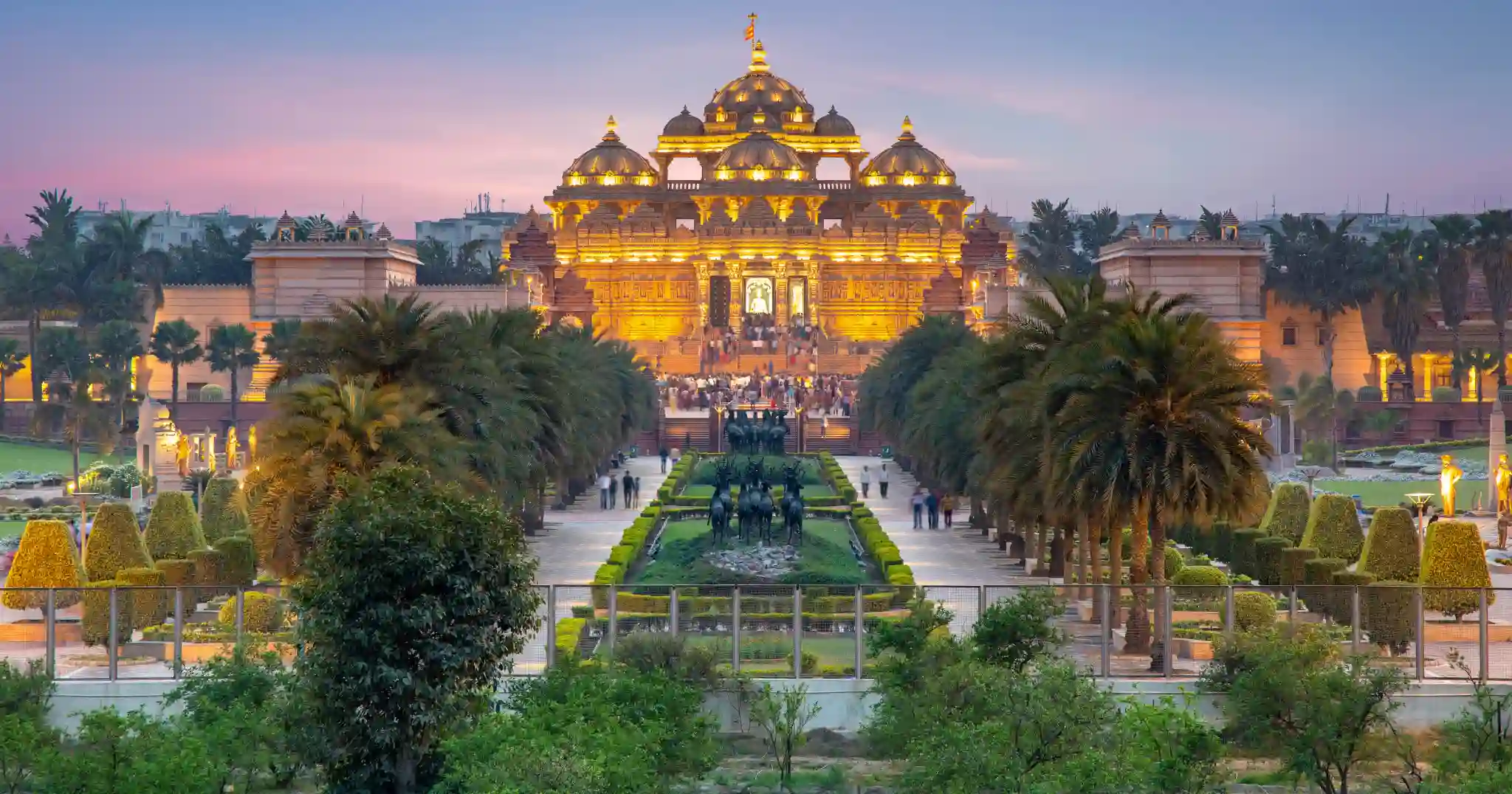
Akshardham is a large temple complex dedicated to Bhagwan Swaminarayan, built by the BAPS Swaminarayan Sanstha and opened in 2005. The main structure is carved entirely from stone, with detailed depictions of Indian art, culture, and spirituality across its walls and pillars.
Beyond the temple itself, the complex includes landscaped gardens, an exhibition on Indian history and values, and a boat ride that takes visitors through different periods of the country’s past. Give yourself a few hours here, since rushing through undersells just how much detail has gone into the place.
2. Qutub Minar
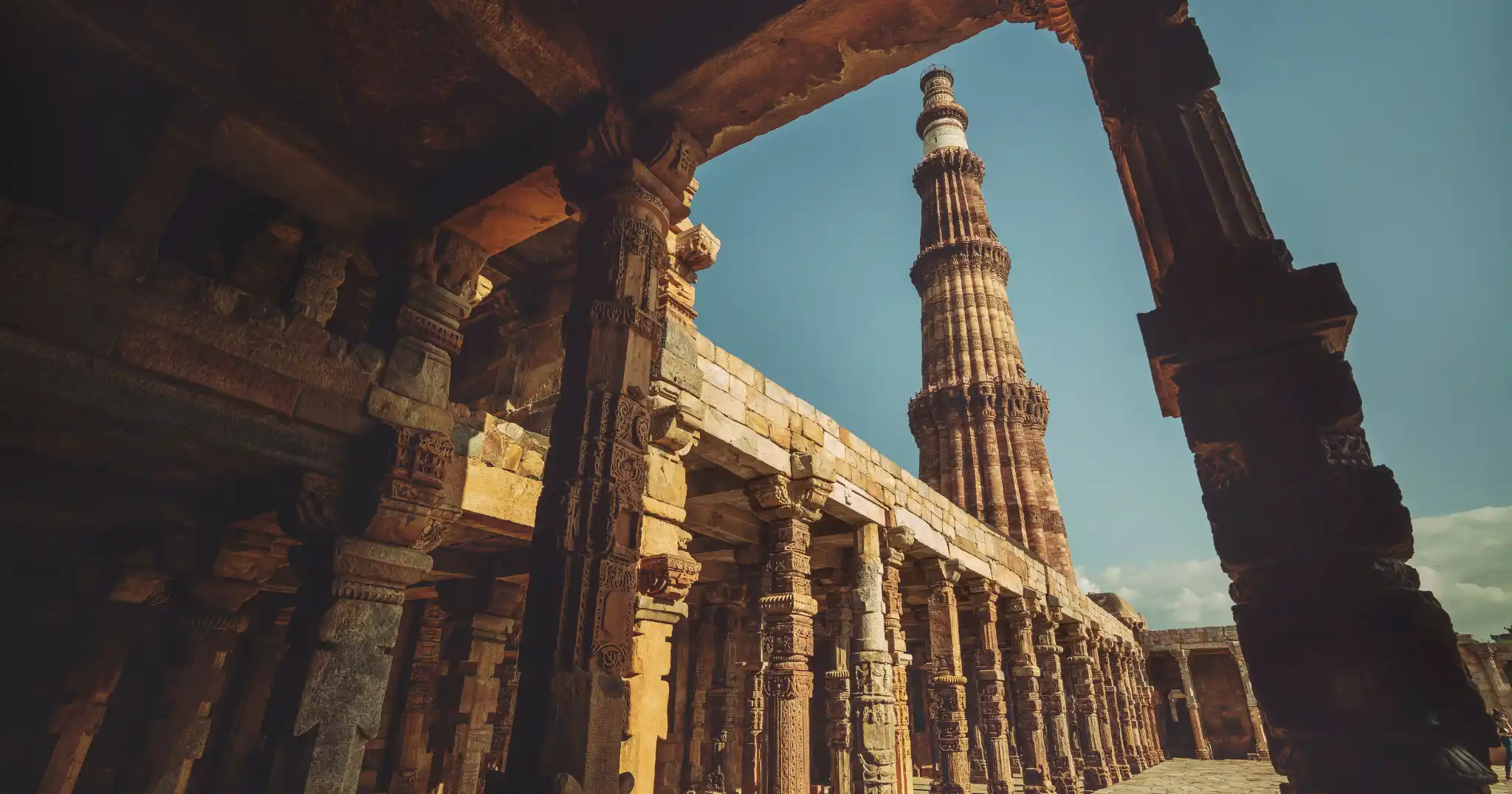
Construction on the Qutub Minar began in the 12th Century, making it one of Delhi’s oldest surviving monuments and a UNESCO World Heritage Site. Standing at around 72.5 metres across five storeys, it’s covered in intricate carvings and Quranic inscriptions.
Inside the surrounding complex stands the Iron Pillar of Delhi, roughly 1,600 years old and still remarkably resistant to rust, a detail that continues to puzzle metallurgists studying how it was made. The wider complex, with its ruins and green lawns, is worth a slow walk rather than a quick photo stop.
3. Humayun’s Tomb
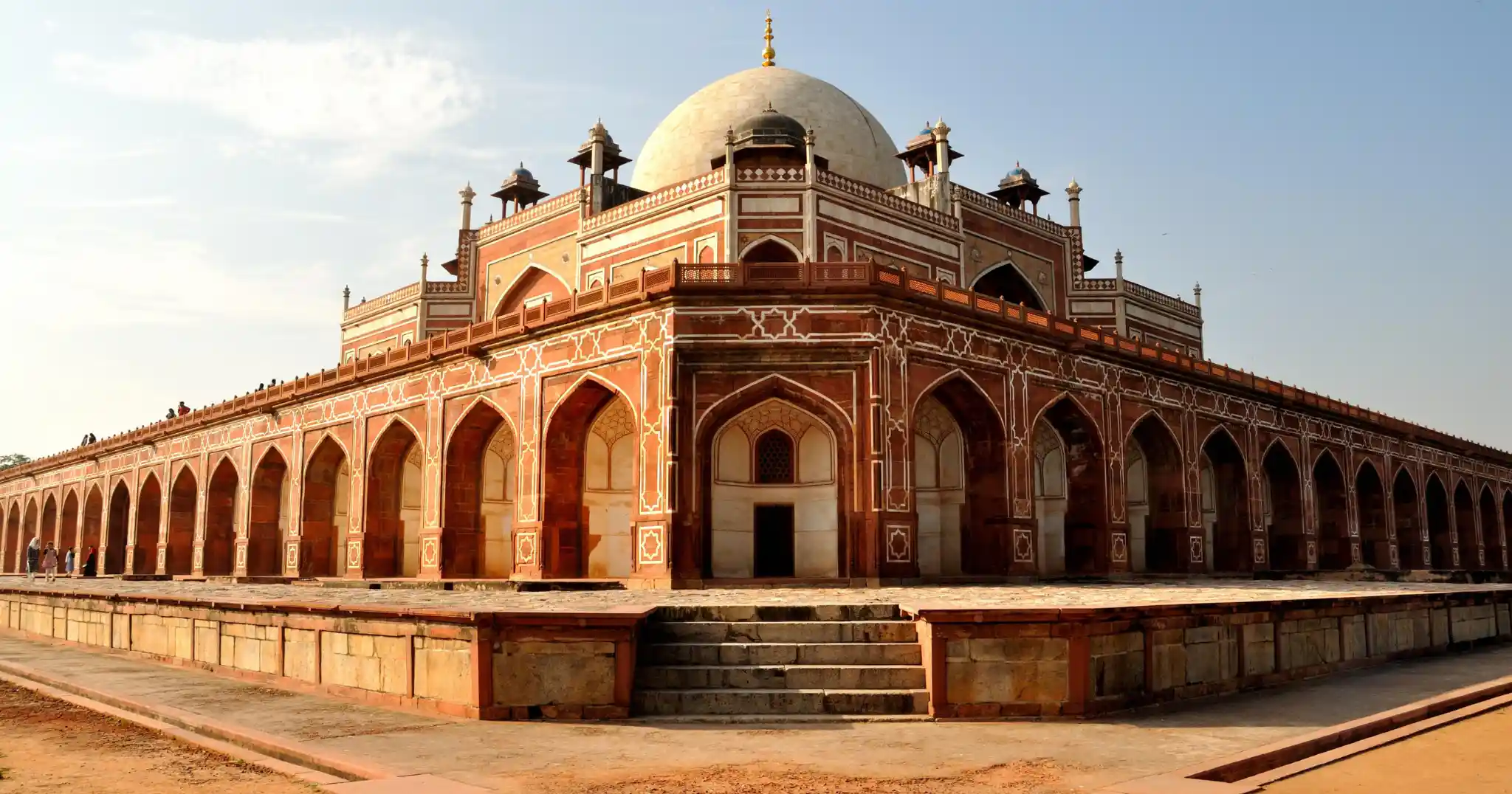
Built around 1565 and commissioned by Empress Bega Begum for her husband, Emperor Humayun, this tomb holds real architectural significance as the first garden-tomb built on the Indian subcontinent.
Its layout, a central mausoleum set within a formal charbagh garden, went on to directly influence the design of the Taj Mahal decades later. The tomb sits in the Nizamuddin East area, and the site is also a UNESCO World Heritage Site in its own right.
4. Gurudwara Bangla Sahib
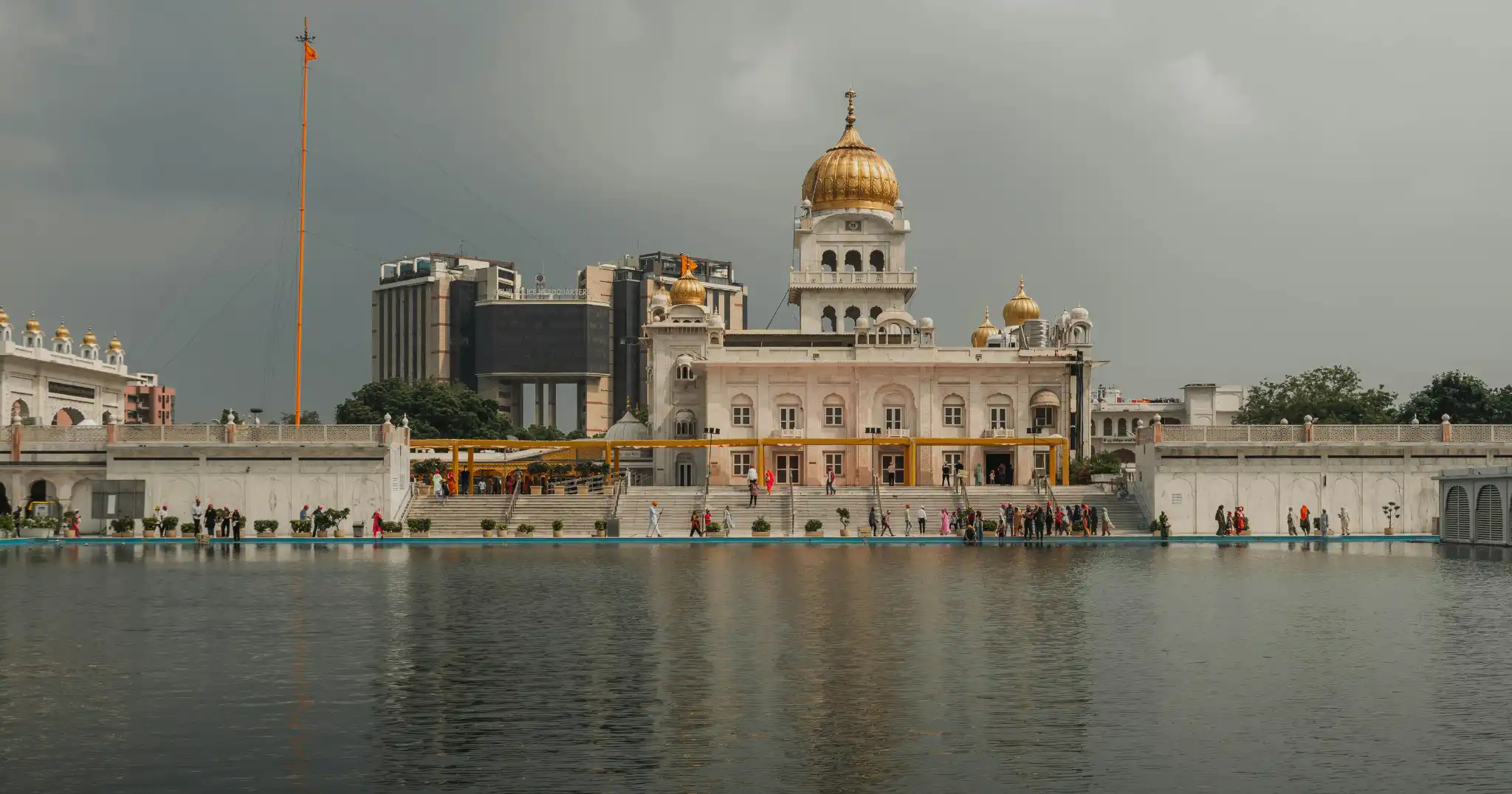
This Sikh place of worship traces back to a visit by the eighth Sikh Guru, Guru Har Krishan, in the 17th century, with the current gurdwara structure expanded significantly in the 18th century. Its white marble facade and golden dome are visible from a distance.
The complex includes a sacred sarovar, a museum, and a kitchen that serves free community meals, known as langar, to thousands of people every single day, regardless of faith or background. Watching the langar kitchen in action is genuinely one of the more moving things to see in the city.
5. India Gate
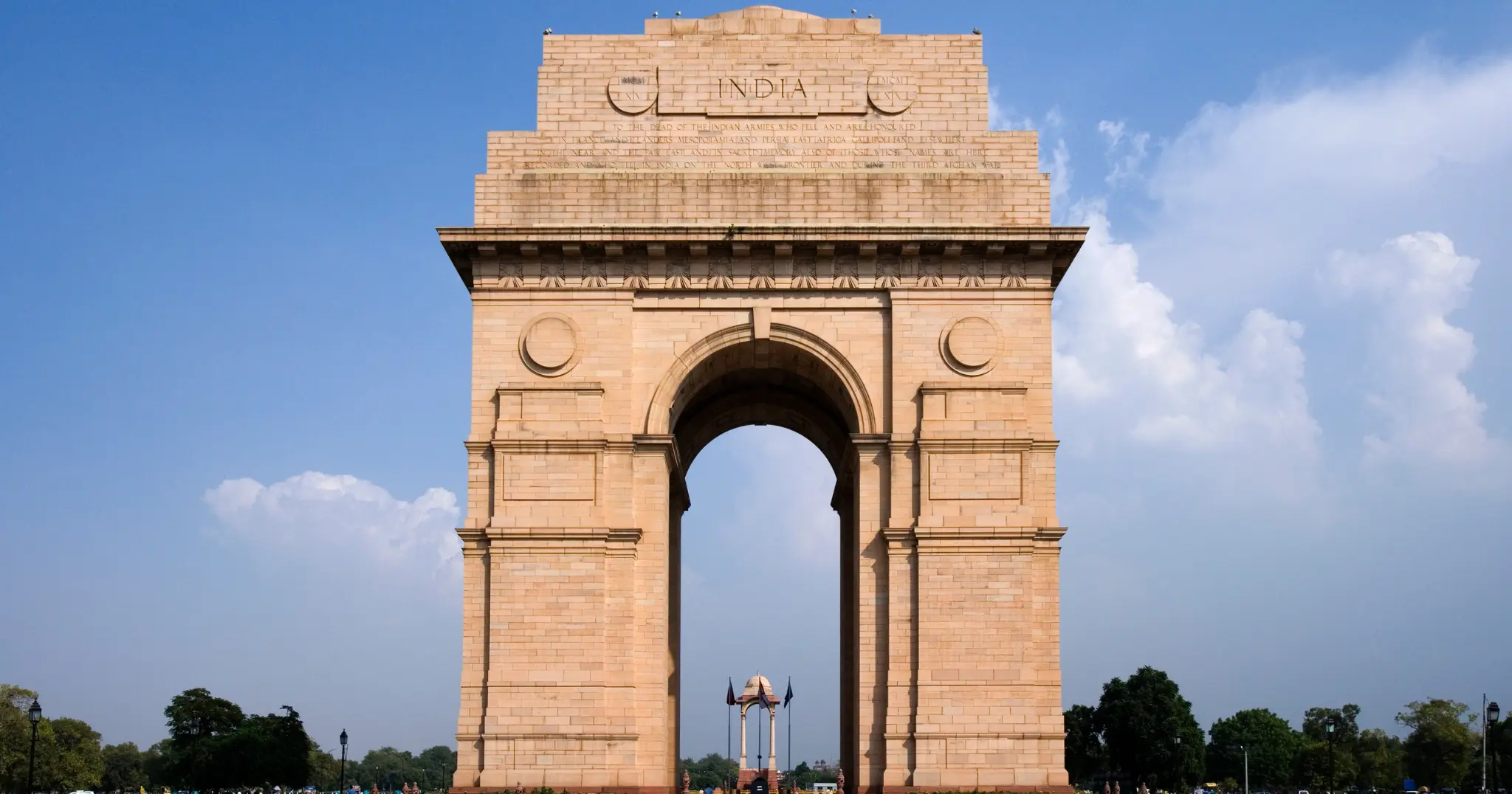
Designed by Sir Edwin Lutyens and completed in 1931, India Gate is a war memorial built to honour Indian soldiers who died in the First World War and the Third Anglo-Afghan War. The names of tens of thousands of soldiers are inscribed on its walls.
The wide lawns around the monument are a popular gathering spot in the evenings, with families picnicking and street food vendors setting up nearby, making it as much a part of daily Delhi life as it is a historic monument.
6. Lodhi Garden
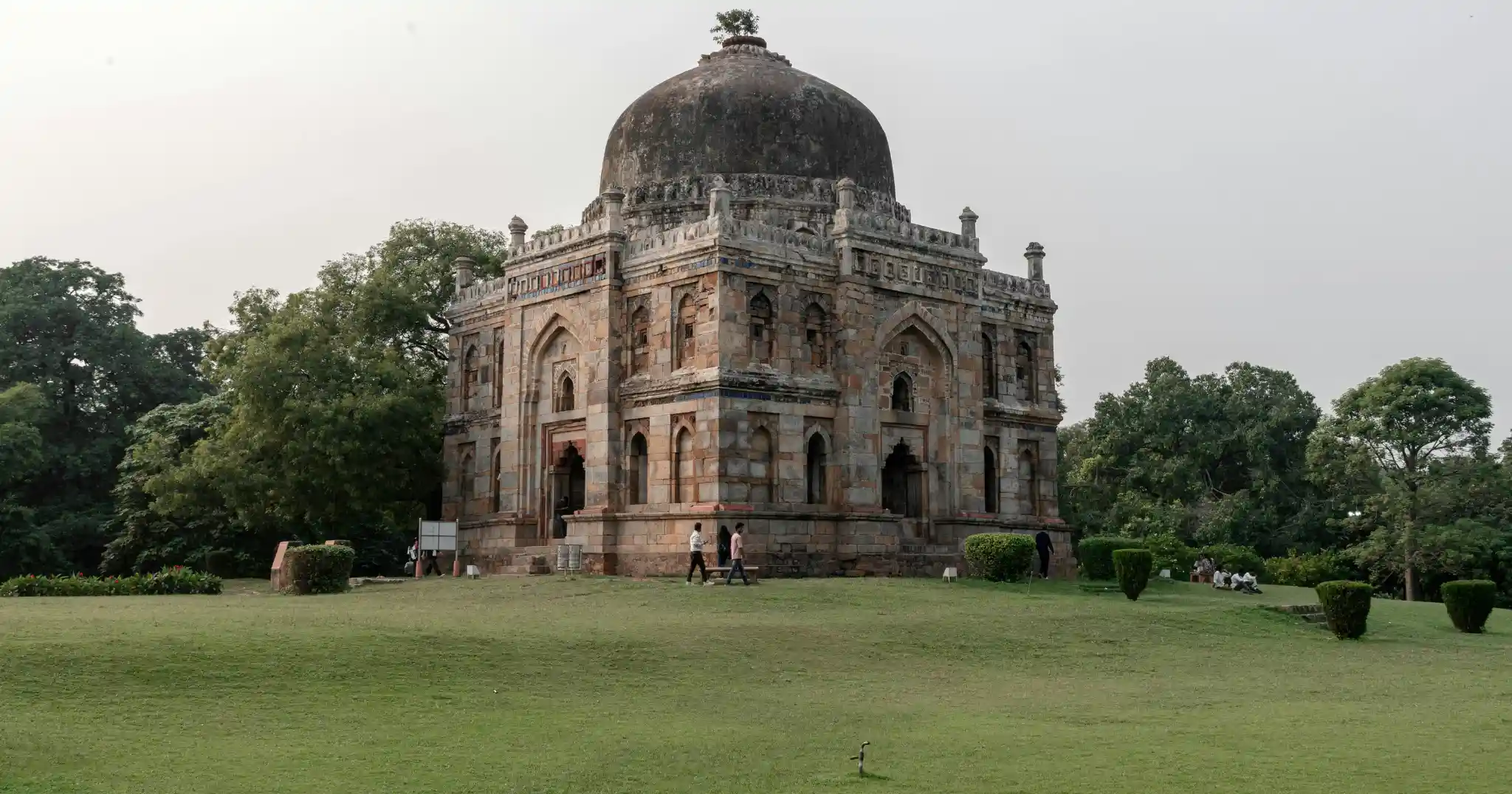
Lodhi Garden brings together 15th-century tombs from the Sayyid and Lodi dynasties inside a landscaped park that was later redesigned in the 1968s. Alongside the historic mausoleums and a triple-domed mosque known for its blue tilework, the garden is home to over 100 species of trees and a thriving population of birds and butterflies. It’s one of the calmer places on this list, popular with locals for morning walks and a good option if you want a break from monument-hopping.
7. Lotus Temple
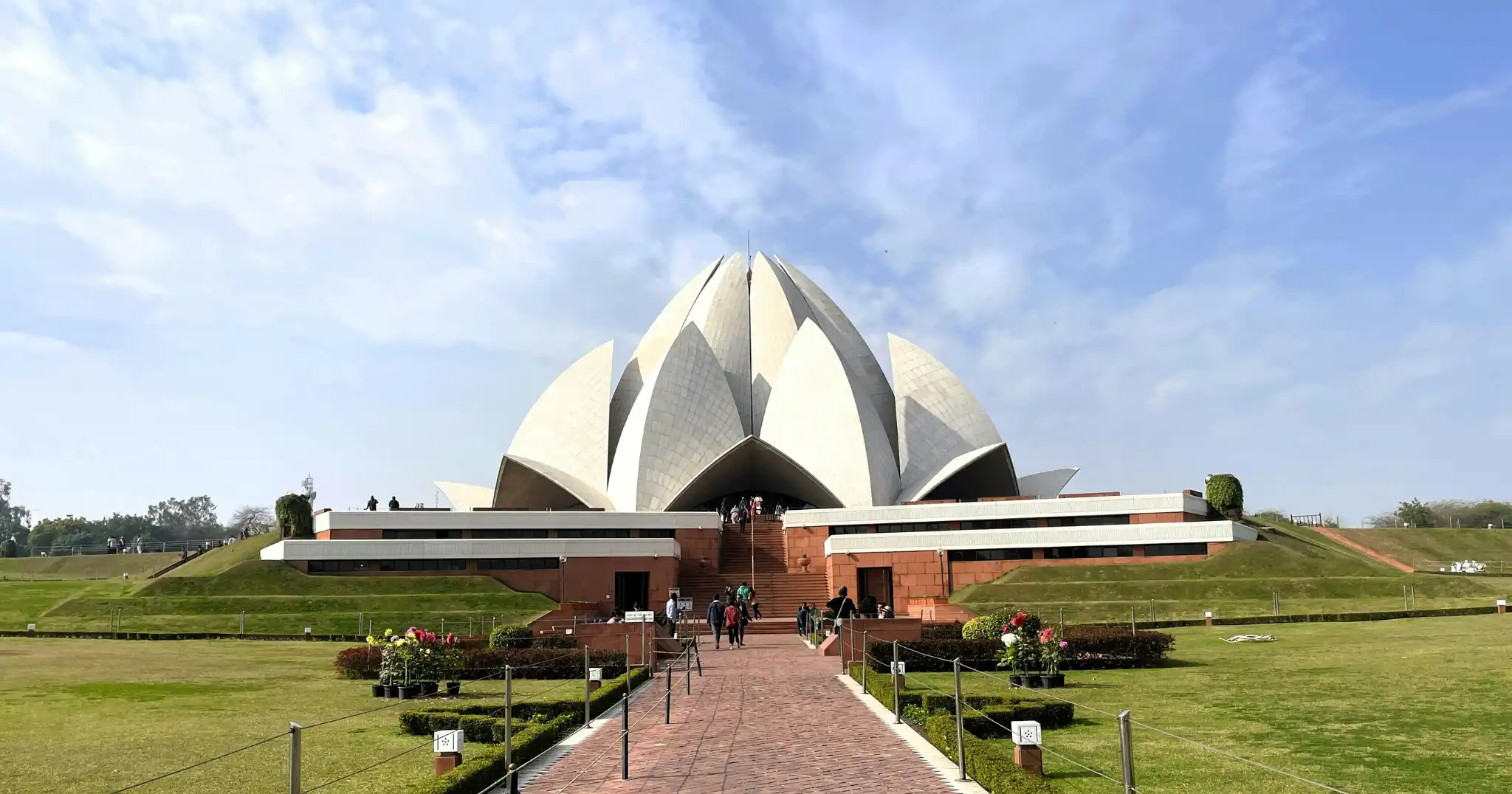
Completed in 1986 and designed by architect Fariborz Sahba, the Lotus Temple is a Bahá’í House of Worship shaped like a blooming lotus flower, made up of 27 marble-clad petals.
It’s open to people of all faiths and backgrounds for quiet reflection and prayer, with no religious ceremonies or sermons conducted inside. The building’s clean, symmetrical design and surrounding pools make it one of the more visually striking modern structures in Delhi.
8. Red Fort
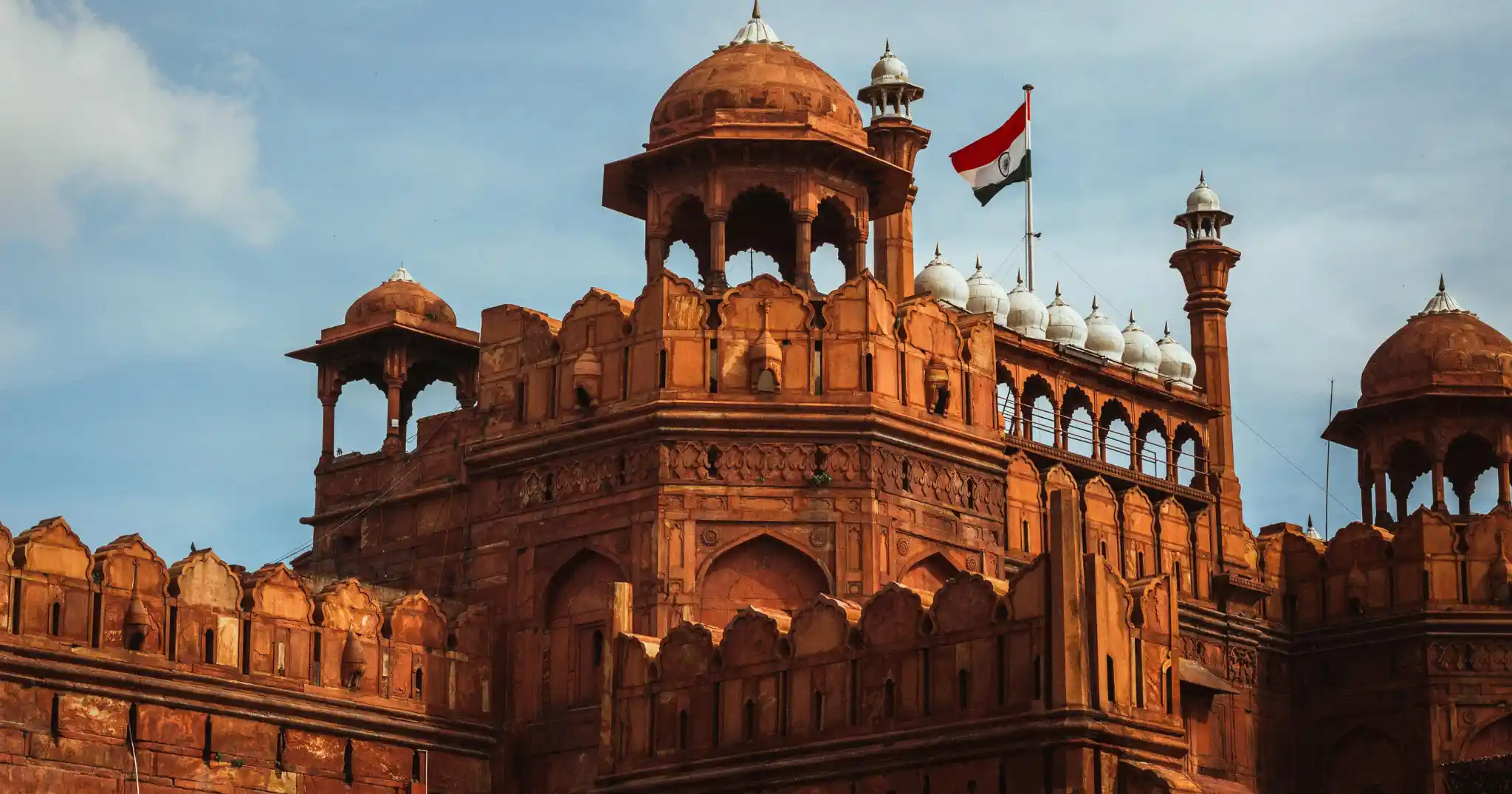
Built by Mughal Emperor Shah Jahan between 1638 and 1648, the Lal Qila (Red Fort) served as the main residence of Mughal emperors for roughly two centuries. Its massive red sandstone walls enclose palaces, halls, and gardens that once formed the heart of the empire, and the fort is a UNESCO World Heritage Site.
Every year on India’s Independence Day, the Prime Minister addresses the nation from its ramparts, a tradition that’s kept the fort central to modern Indian identity, not just its Mughal past.
9. Hauz Khas Village
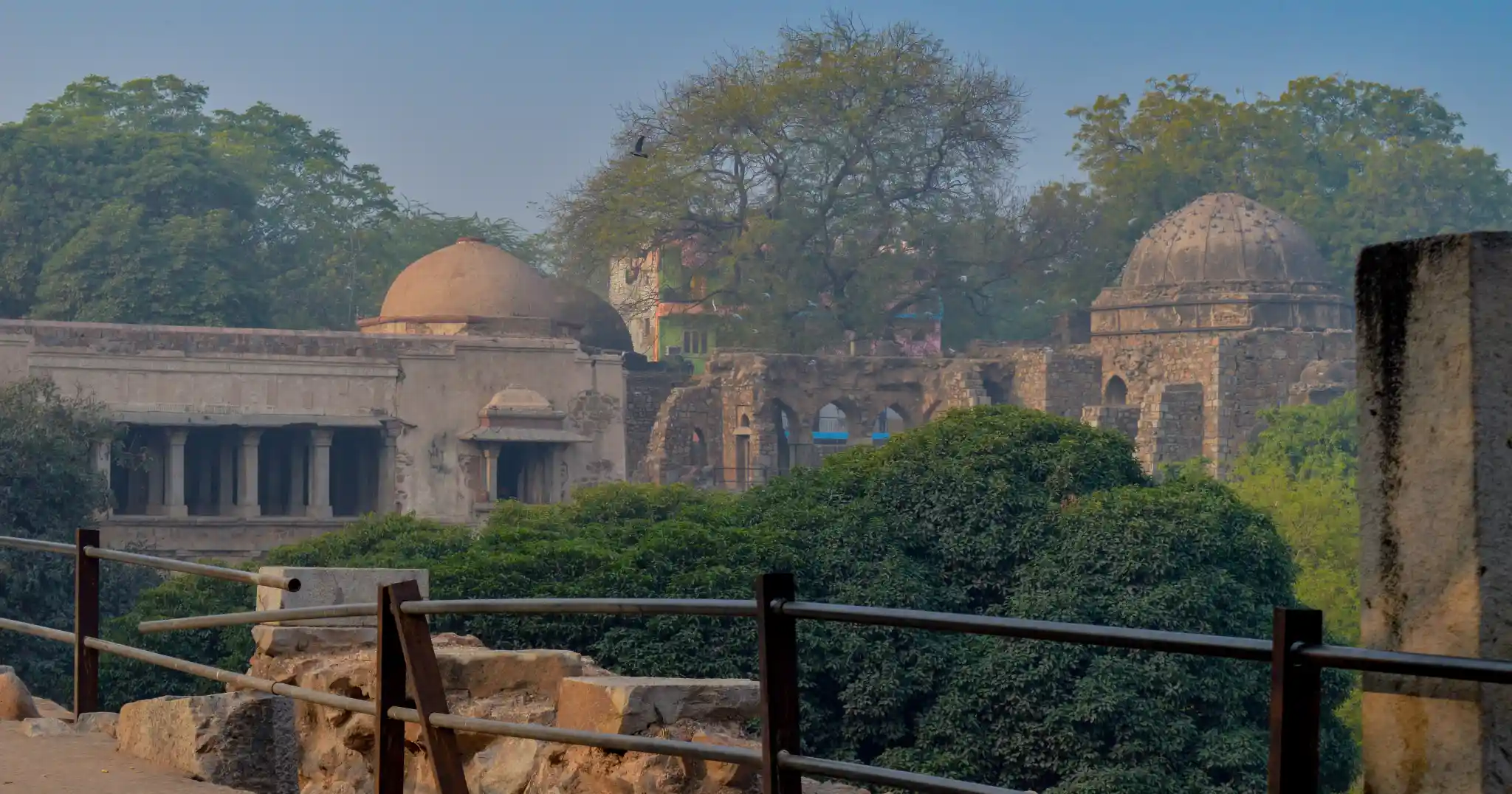
Hauz Khas takes its name from a large reservoir built in the late 13th century under Sultan Alauddin Khilji, with a madrasa added beside it in the 14th century by Feroz Shah Tughlaq.
What makes this neighbourhood interesting today is the contrast: those centuries-old ruins now sit surrounded by a lively mix of cafes, art galleries, and boutique shops. It’s one of the few places in Delhi where medieval heritage and contemporary city life share the same street.
10. Connaught Place
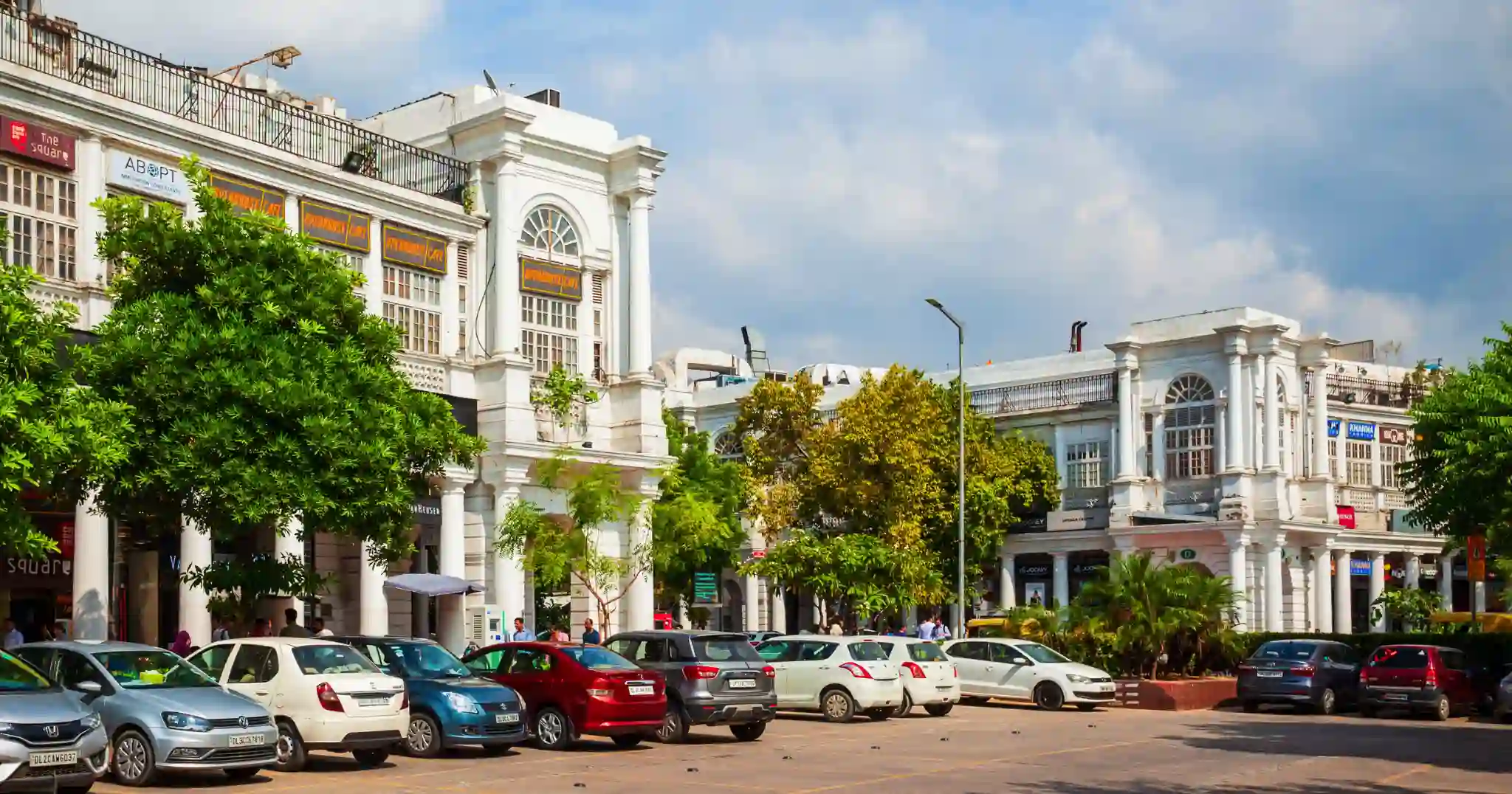
Built between 1929 and 1933 under British colonial rule and designed by architect Robert Tor Russell, Connaught Place is arranged around a large circular green space, with two concentric rings of Georgian-style colonnaded buildings. Officially renamed Rajiv Chowk, most people still call it CP.
Today it’s one of Delhi’s major shopping, dining, and business hubs, and a good example of how the city’s colonial-era planning still shapes daily life. Among the various tourist places to visit in Delhi, this is the one that best captures the city’s more modern, commercial rhythm.
How Much Time Do You Need to Explore These 10 Places?
If you’re wondering how these fit together practically, here’s a realistic breakdown.
In one day, you could manage three or four of the closer sites together. India Gate, Humayun’s Tomb, and Lodhi Garden are reasonably close to one another, for example, though it will feel like a full day of moving around.
A practical two-day plan could split Old and New Delhi: day one for Red Fort, the nearby Jama Masjid area, and Gurudwara Bangla Sahib, day two for Qutub Minar, Humayun’s Tomb, Lotus Temple, and India Gate.
With three days, you can slow down considerably, adding Akshardham, Lodhi Garden, Hauz Khas Village, and Connaught Place without feeling rushed, and leaving room for food stops and simply wandering.
This is really the heart of picking from any list of 10 best places to visit in Delhi, deciding not just what to see, but how much time each place actually deserves.
Planning Your Delhi Trip with Chai Rose Travels
Fitting these ten places into a trip that actually flows well takes a bit of planning, working out which sites cluster together, how to get between Old and New Delhi efficiently, and where to stay so you’re not spending half your day in transit.
Chai Rose Travels can help put this together properly, building an itinerary around the sites that matter most to you, arranging transport between them, and sorting accommodation that puts you within easy reach of both Old and New Delhi. Whether you want a tightly packed two-day city tour or a longer, more relaxed trip that folds Delhi into a wider Golden Triangle tour with Agra and Jaipur, having someone handle the logistics means you spend your time actually seeing these places, not figuring out how to get to them.
Frequently Asked Questions
Q. What are the best places to visit in Delhi for first-time visitors?
Ans. Red Fort, Qutub Minar, Humayun’s Tomb, India Gate, and Akshardham cover a strong mix of history and culture that works well for a first visit.
Q. How many days are enough to explore Delhi?
Ans. Two to three days let you cover the major sites without rushing. A single day works if you’re short on time, but you’ll need to prioritise.
Q. Which Delhi attractions are free to visit?
Ans. India Gate, Lodhi Garden, Gurudwara Bangla Sahib, and Akshardham’s main temple are free to enter, though some sections or exhibitions inside larger complexes may charge separately.
Q. What are the best historical places to visit in Delhi?
Ans. Red Fort, Qutub Minar, and Humayun’s Tomb are the strongest choices for genuine Mughal-era history; all three carry UNESCO World Heritage status.
Q. What are some places to visit in Delhi with family?
Ans. Akshardham, Lodhi Garden, and India Gate all work well for families, offering open space, manageable walking distances, and enough variety to keep both kids and adults interested.