
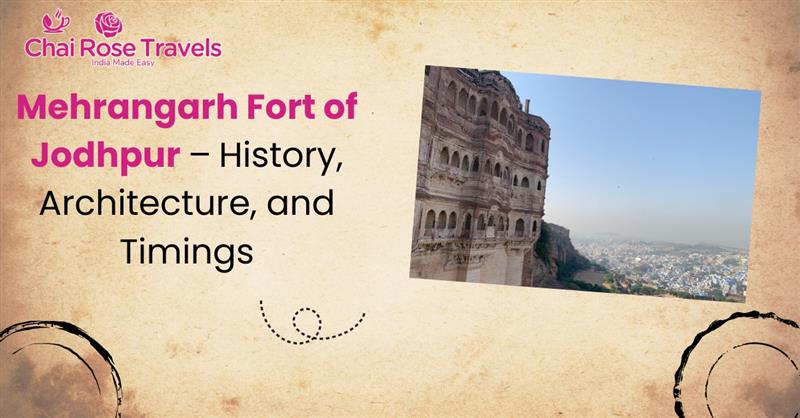
Before I’d been to India, I had no idea how many spectacular forts this incredible country has. Every city seems to be home to one (or more), and Jodhpur has a particularly magnificent one in the form of Mehrangarh Fort. It stands high on a rocky hilltop, overlooking the stunning ‘Jodhpur Blue City’. It is the best place to start any tour of Jodhpur as you can get your bearings by looking down at the city below. Mehrangarh Fort of Jodhpur dates back to the 15th century and is particularly huge, housing impressive palaces, a museum, and all types of fabulous architecture.
Based in the state of Rajasthan, Mehrangarh is a particularly well-preserved fort, spanning around 1,200 acres. The original fort was built around 1459 by the then Rajput ruler of the Rathore clan, Rao Jodha. Successive rulers built on to the fort, mainly from the 17th century. The fort has an impressive seven gates, with the one at the main entrance called Jai Pol (which means ‘victory gate’). Mehrangarh is etched in history and romanticised by writers through the centuries. The English writer, Rudyard Kipling, said of it: “…a palace that might have been built by Titans and coloured by the morning sun.”
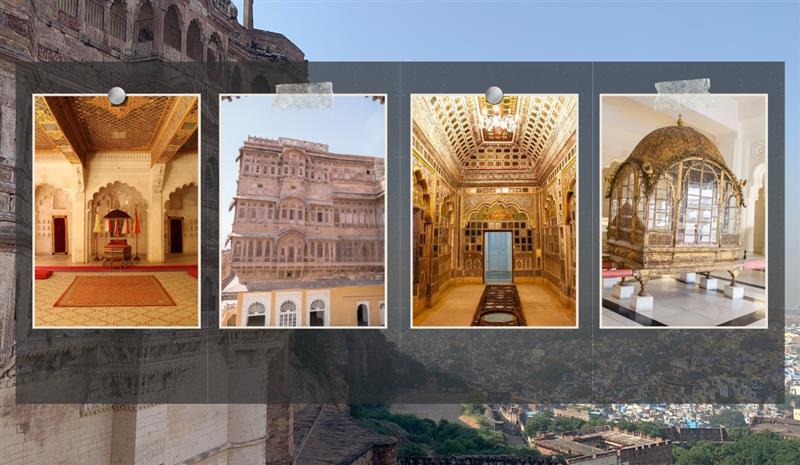
As well as the seven gates, the fort is home to the most exquisite palaces, including: Moti Mahal (Pearl Palace), Phool Mahal (Flower Palace), and Sheesha Mahal (Mirror Palace. Any Jodhpur tour Packages of India are likely to include forts and palaces, but Mehrangarh really stands out in my memory as one of outstanding beauty.
Looking back at my photos of that sunny October day when I visited with my friend, Juliette, we seem to be bathed in sunlight that bounces off the honey coloured walls. The wonderful signs: ‘Lungs at work – please don’t smoke’, just add to the charm. Seeing ladies swathed in brightly coloured and intricately decorated saris literally screams at you that you are in India.
Howdahs are seats for riding on the back of elephants or camels, and they typically have canopies to protect the passengers from the Indian sun and usually can accommodate two or more people. This fort seems to be teeming with incredibly well-preserved and elaborate howdahs, both practical and beautiful, completely fit for their illustrious passengers.
Fabulous silver idols of beloved Hindu goddesses, beautiful miniature paintings, mirrored ceilings, fabulous archways, stunningly preserved royal clothing, swords, cannons and doors painted in the type of muted pastels which would make Farrow and Ball swoon, all make for the type of experience which leaves you completely flabbergasted by the history of the place and the incredible craftsmanship that led to the creation of such breathtaking artifacts and buildings.
Much-loved Hindu gods such as Ganesha (the elephant god) are immortalised in marble and decorated with garlands of marigolds. Windows open to reveal beautiful carvings and paintings. Fort fatigue didn’t get me here – I think I spent most of the time using every superlative I could think of to express my awe and incredulity that greeted me around every corner.
Refreshments are available in a refined courtyard area, and I enjoyed some delicious masala chai and cardamom biscuits; the perfect pick-me-up after a morning of sightseeing. I am a complete sucker for any gift shop, and Mehrangarh does not disappoint! I would go as far as to say it was the most tasteful gift shop I have encountered in India, and the paper carrier bags to hold your souvenirs are worth keeping! You might meet some of the artists who paint and sell their miniature paintings in the gift shop, as we did. They will explain their intricate art, and you can buy signed paintings at a reasonable price.
No visit to Jodhpur would be complete without visiting Mehrangarh. The whole place oozes style, history, and taste, and stands out in my memory as a fort of forts – and believe me, on a visit to India, you may end up seeing a lot of them!
The fort is open daily from 9.00 am until 5.00 pm, and the last tickets must be bought by 5.00 pm, when the ticket office closes. After this time, visitors are usually allowed to stay until sunset to enjoy the incredible views of the city and to explore the complex. I would try to arrive early-ish and stay for at least half a day, if not a day. Take a picnic or grab a bite to eat when there and browse the various sights of the fort at leisure. October through to March are probably the most comfortable months to visit for tourists before it gets too hot.
Mehrangarh’s beauty and ambience will stay with you long after you have left, and no visit to Jodhpur would be complete without doing justice to its most impressive and majestic building. You can almost feel yourself letting the outside world slip away whilst you get immersed in the splendour of bygone days and gaze at craftsmanship which is truly out of this world. Take some time to find somewhere to sit and watch the world go by. Mehrangarh has stood proudly guarding the Blue City for over 500 years; leave the busyness of everyday life behind when you visit. Take time to drink it all in and just appreciate the beauty of this Indian jewel in Rajasthan’s heavy and historical crown.