
What makes Rajasthan’s forts and palaces different from other heritage sites in India? Every major one carries a specific, documented story, not a vague ‘ancient and mysterious’ label. Some of what you will hear on the ground is settled history. Some of it is local legend passed down for generations. And some of these buildings are still lived in or slept in today. Knowing which is which makes a visit far more interesting than simply ticking off famous names.
That is the approach this guide takes. Each site below is treated as documented history, local legend, or living heritage, sometimes all three at once. Because it is genuinely how Rajasthan’s royal past has come down to us.
Amer Fort, Jaipur: Where the Rajput Story Starts
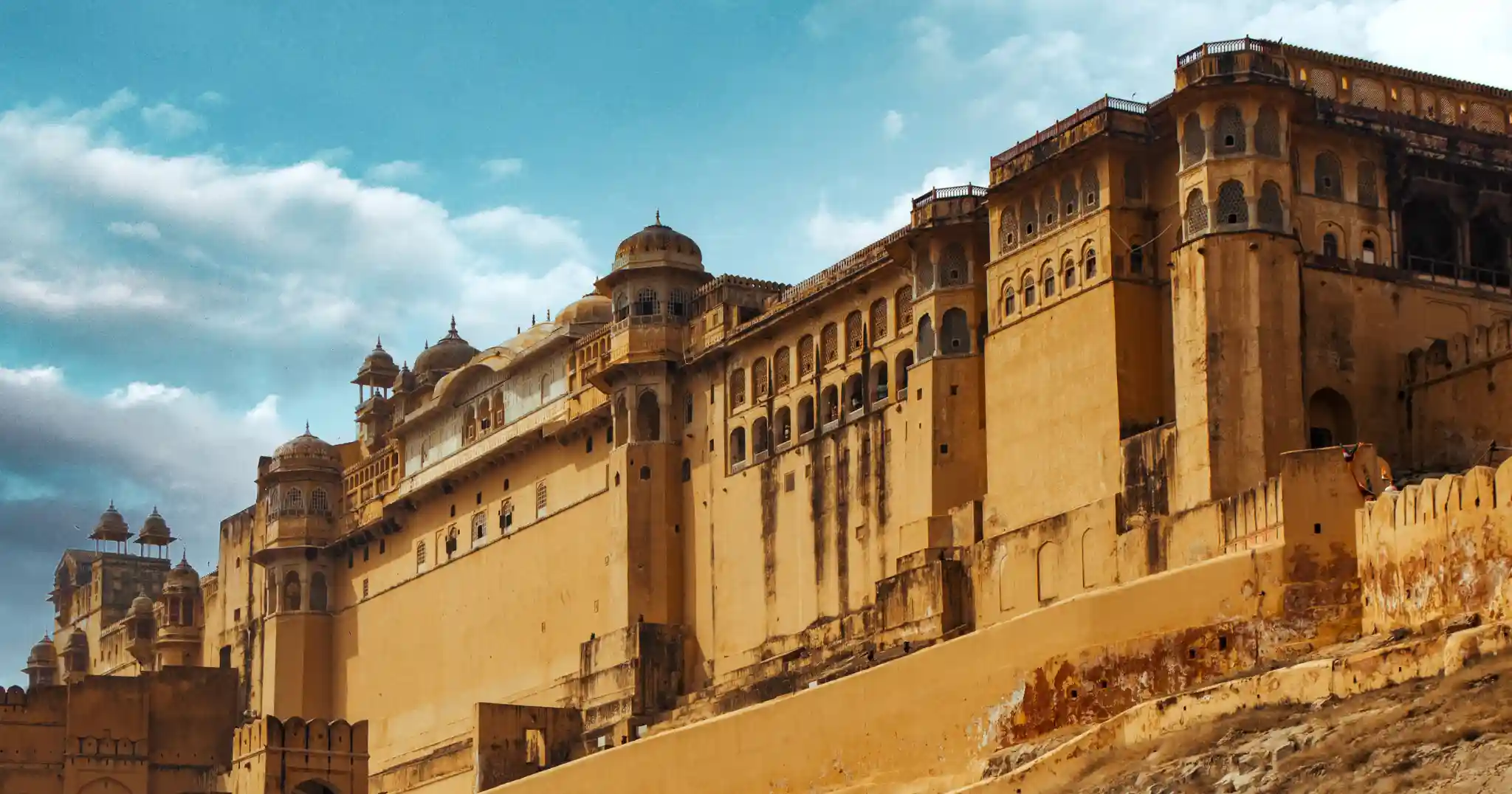
Long before Jaipur city existed, Amer was the seat of power for the Kachwaha Rajputs. The fort you see today was largely built from 1592 under Raja Man Singh I, blending Hindu and Mughal architectural styles across its courtyards and gateways. Inside, the Sheesh Mahal, a hall lined with mirrored glass panels, is one of the most photographed interiors in Rajasthan.
Amer Fort Rajasthan is one of six forts inscribed together as the Hill Forts of Rajasthan on UNESCO’s World Heritage List in 2013 (Source: Link). That listing recognises the fort’s scale, its defensive planning, and its role as an example of Rajput architectural tradition, documented fact rather than folklore.
Beyond the Sheesh Mahal, the fort’s Ganesh Pol gateway and its terraced gardens overlooking Maota Lake are worth building extra time for. Most visitors rush through in an hour, but the fort rewards a slower pace, particularly in the early morning before the crowds and heat build up.
City Palace, Jaipur: A Palace Still Being Lived In
Jaipur’s City Palace began under Sawai Jai Singh II in the 1720s, shortly after he founded the city itself. Parts of the complex are a residence for the former royal family today, while other sections operate as a museum open to visitors. That combination, living residence and public heritage site, is part of what makes it distinct from many other palaces on this list.
Worth noting early: When travelers research the City Palace Rajasthan, there are two City Palaces in Rajasthan that people often confuse, this one in Jaipur and a separate, older complex in Udaipur. They belong to different dynasties entirely.
Hawa Mahal and Jantar Mantar: Jaipur’s Quieter Landmarks
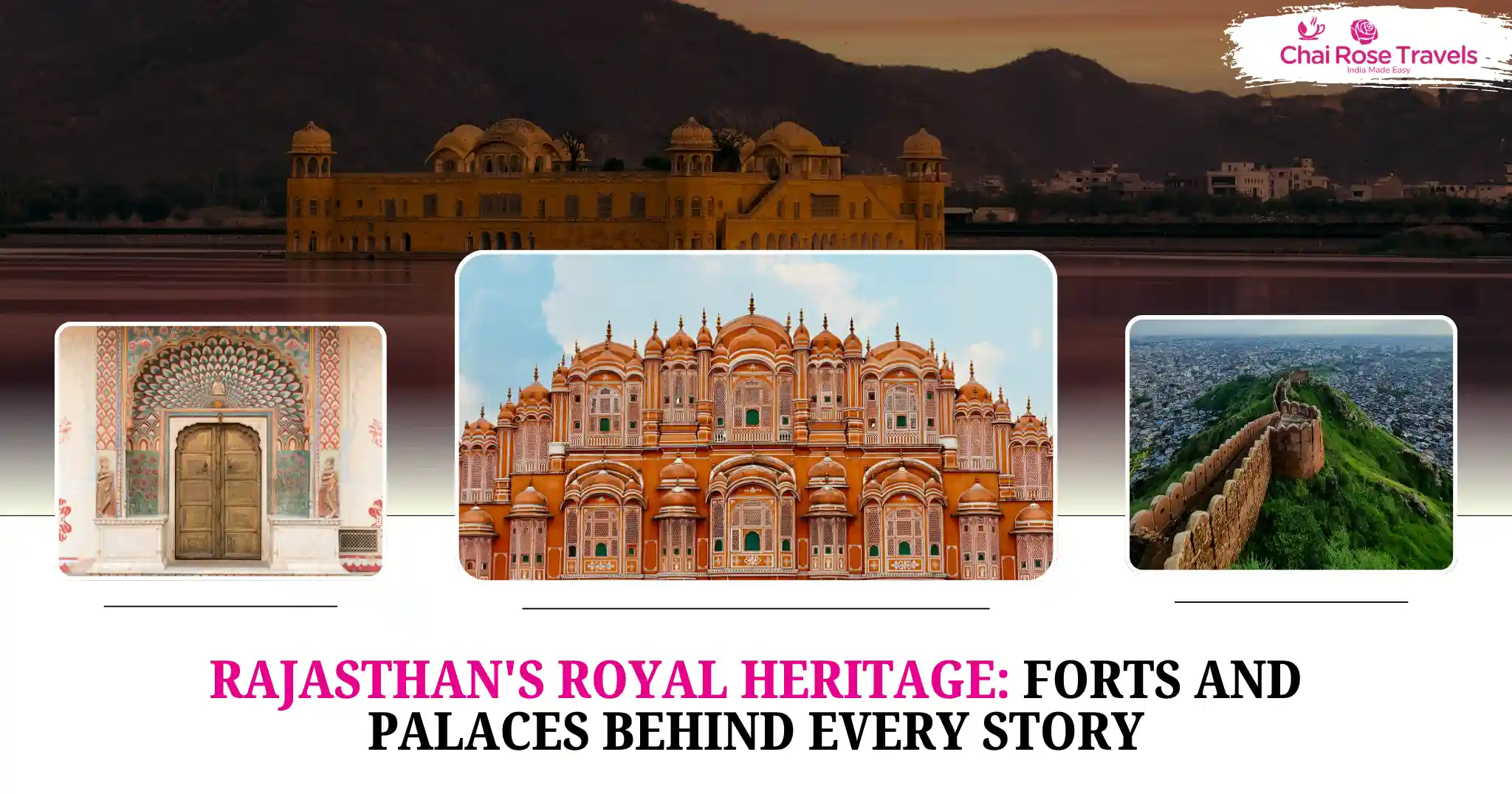
Hawa Mahal, the Palace of Winds, was built in 1799 under Maharaja Sawai Pratap Singh. It was designed so the women of the royal household could watch street life and processions below without being seen themselves. Hawa Mahal Rajasthan facade holds 953 small carved windows, or jharokhas, arranged in a honeycomb pattern that also helps cool the interior.
Nearby to it stands Jantar Mantar, an astronomical observatory built between 1728 and 1734 by the same Jai Singh II who founded Jaipur. The site holds nineteen stone instruments designed to track astronomical positions with the naked eye, and it got its own UNESCO World Heritage listing in 2010, separate from the Hill Forts inscription.
Together, these two sites make the point that Jaipur’s royal legacy wasn’t only about warfare. Some of it was social design and science as well.
Nahargarh Fort: The Fort That Wouldn’t Stay Built
Nahargarh Fort, Rajasthan, sits on the Aravalli ridge above Jaipur. It was built in 1734 as a retreat for the royal family rather than a working defensive post. Local legend holds that construction was repeatedly disrupted by the spirit of a Rathore prince, Nahar Singh Bhomia, who was said to have died on the site and resented the disturbance. Work only proceeded smoothly after a shrine was built in his memory within the fort.
That’s local legend, not something historians treat as a verified event. But the shrine itself is real, still standing inside the fort, which is exactly the kind of detail that turns a story into something you can actually go and see.
City Palace, Udaipur: The Other City Palace
Construction on Udaipur’s City Palace began in 1559 under Maharana Udai Singh II, after he shifted the Mewar capital away from Chittorgarh. Built over roughly four centuries by successive rulers, it now ranks as the largest palace complex in Rajasthan. It is located on the eastern bank of Lake Pichola with views across to the Lake Palace.
Parts of the complex still work as a museum and a working residence for the Mewar family today. It makes it like Jaipur’s palace, both documented history and living heritage rather than a frozen monument.
Mehrangarh Fort, Jodhpur: Built Over a Hermit’s Curse
Rao Jodha founded Mehrangarh in 1459 as the new capital for his kingdom, choosing a hilltop known as Bhakurcheeria for its strategic height. According to local legend, a person named Cheeria Nathji lived on that hill alone and refused to leave. When he was finally moved, he is said to have cursed the site with permanent water scarcity. It is a curse locals still sometimes point to while talking about Jodhpur’s dry climate.
What is documented is that Mehrangarh Fort in Rajasthan has never fallen to a direct assault in its history. And that it remains one of the largest forts in India, with its sandstone walls rising well over a hundred feet above the Blue City below.
Chittorgarh Fort: History & Tradition
Chittorgarh is the largest fort complex in India and part of the same UNESCO Hill Forts inscription as Amer (Source:Link). It served as the Mewar capital for centuries before Udai Singh II relocated to Udaipur, and its scale alone makes it worth the visit.
The Chittorgarh Fort in Rajasthan is also where Rajasthan’s most repeated stories live, and here it is worth being precise about what is history and what is tradition. Maharana Pratap’s refusal to Mughal expansion, including his role at the Battle of Haldighati, is documented history, recorded across multiple modern and near-contemporary sources.
The story of Rani Padmini and the jauhar (mass self-immolation) following a siege is based on legends, folklore, and a famous 16th-century epic poem written long after the events took place.
Historians generally treat it as tradition rather than something they can verify as a single settled event. Both threads matter to how the Chittorgarh fort Rajasthan India is remembered locally, but they belong to different categories of truth. A good guide on site will usually make that difference clear rather than blur it.
Bhangarh Fort, Alwar: What’s Documented, and What’s Just Told
Bhangarh Fort sits in Alwar district, roughly 90 kilometres from Jaipur, built in the seventeenth century as a secured town under the Kachwaha bloodline. What is genuinely documented is that the Archaeological Survey of India restricts entry to the fort complex after sunset and before sunrise.
Around Bhangarh fort Alwar Rajasthan, a cluster of village traditions has grown: stories of curses and unexplained happenings that locals have told for generations. That draws curious visitors from across India. That folklore is worth knowing about because it’s genuinely part of the site’s identity today, but it remains folklore.
The fort’s real interest lies just as much in its neglected streets, temples, and market layout, a rare, largely intact glimpse of a working Rajput town rather than just a single grand building. Several Hindu temples within the complex, including one dedicated to Gopinath, are still functioning temples, which is worth remembering when visiting. This is a heritage site with living religious use.
The Palaces That Became Places to Stay
Several of the most iconic royal palaces in Rajasthan are no longer purely static monuments; many have been converted into heritage stays where visitors experience living history firsthand. Umaid Bhawan Palace in Jodhpur, part 20th-century royal residence and part luxury hotel, remains partly home to the former royal family.
The Lake Palace in Udaipur was built in the eighteenth century as a summer retreat. It now operates as a hotel on its own island in Lake Pichola. These are living heritage in the truest sense, buildings whose stories continue rather than ending in a museum display case.
Planning Your Own Royal Heritage Trail
These sites cluster naturally across five main stops: Jaipur, Udaipur, Jodhpur, Chittorgarh, and Alwar. A well-planned Rajasthan tour package typically links Jaipur, Chittorgarh, and Udaipur into a single seamless route before connecting outward to Jodhpur. The road distances between these cities are manageable in a single trip rather than requiring separate visits.
If your time is limited, a shorter Rajasthan travel package focused on Jaipur alone still covers an impressive range: Amer Fort, City Palace, Hawa Mahal, Jantar Mantar, and Nahargarh, without much travel between stops. Adding Chittorgarh or Bhangarh generally means an extra day or two on the road, worth building into your itinerary rather than rushing.
Whichever route you choose, it is worth checking opening hours and any seasonal closures before finalising dates, since some sites reduce hours during the summer months or close for maintenance or restoration work.
Closing Thought
The forts and palaces of Rajasthan don’t need exaggeration to be remarkable. What they need is context: knowing when you’re standing somewhere with a documented past, somewhere carrying a story that’s never been verified, and somewhere still quietly being lived in. Once you start noticing the difference, the whole state reads less like a checklist and more like exactly what it is: a very long, very well-told story.
At Chai Rose Travels, this is the kind of detail we try to build into every Rajasthan itinerary, not just where to go, but what’s worth knowing once you’re standing there. Whether you are combining together your own route or working with us to plan one, the stories behind these stones are half the reason to visit at all.
Frequently Asked Questions
1. Which forts in Rajasthan are UNESCO World Heritage Sites?
Ans. Six forts, Amer, Chittorgarh, Kumbhalgarh, Ranthambore, Gagron, and Jaisalmer, are jointly inscribed as the Hill Forts of Rajasthan. Jaipur’s Jantar Mantar holds a separate UNESCO listing.
2. What is Bhangarh Fort known for?
Ans. Its Archaeological Survey of India restriction on after-dark entry, and a body of local folklore about curses and unexplained occurrences that has grown around the site over generations.
3. Is Jantar Mantar Rajasthan a palace or an observatory?
Ans. An observatory. It holds nineteen astronomical instruments built in the 1720s and 1730s and has no connection to a royal residence.
4. What’s the difference between the City Palace in Jaipur and the one in Udaipur?
Ans. They belong to different dynasties. Jaipur’s City Palace was built by the Kachwaha rulers from the 1720s; Udaipur’s was built by the Mewar Sisodia dynasty starting in 1559, and is the larger of the two.
5. How many days do you need to see Rajasthan’s major forts and palaces?
Ans. A focused week generally covers Jaipur, Jodhpur, Udaipur, and Chittorgarh without rushing. Adding Alwar for Bhangarh, or slowing the pace in any one city, comfortably stretches that to ten days or more.