

The best shopping places in Jaipur are Johari Bazaar for jewellery, Bapu Bazaar and Nehru Bazaar for textiles and juttis, Tripolia Bazaar for lac bangles and brassware, and MI Road for fixed-price shops. For everything you buy, ask three simple questions. Is it genuine? Is the price fair? Can I get it home easily?
This guide to Jaipur travel guide gives you a checklist for textiles, jewellery and handicrafts. It also explains UK customs rules, which catch many holidaymakers out. Read it before you fly, and keep it on your phone while you shop.
Jaipur Shopping Checklist
There is no single Jaipur best shopping market. Each bazaar does a different job. Use this table to pick the right one for what you want to buy.
| What you want | Where to go | Check this | Ask for |
| Gold, silver and gemstone jewellery | Johari Bazaar | BIS hallmark and HUID code on gold, lab report for gems | An itemised bill |
| Block-printed fabric and clothes | Bapu Bazaar, plus Sanganer and Bagru for workshops | Pattern, fabric and the reverse side | A bill and the printing method |
| Juttis (mojaris) | Nehru Bazaar | Leather, stitching and fit | To try on both feet |
| Lac bangles and brassware | Tripolia Bazaar | Smooth finish, no cracks | To try several sizes |
| Blue pottery | MI Road shops and workshops | Light weight, hand-painted designs | Safe packing |
| Marble, art and decor | Chandpole Bazaar | Material and finish | Shipping options |
| Fixed prices, no haggling | MI Road and the state-run emporium | Price tags | A receipt |
Rough price guide
| Item | Rough range in rupees | About in pounds |
| Block-print scarves and dupattas | ₹300 to ₹1,500 | £2 to £12 |
| Block-print kurtas and dresses | ₹500 to ₹3,000 | £4 to £23 |
| Juttis | ₹200 to ₹2,000 | £2 to £16 |
| Lac bangles (per set) | ₹50 to ₹300 | 40p to £2 |
| Small blue pottery pieces | ₹300 to ₹3,000 | £2 to £23 |
| Silver jewellery | ₹500 to ₹5,000 | £4 to £39 |
IMPORTANT NOTE: These are rough ranges taken from price guides published by local sellers. Real prices change with the material, the workmanship and the shop. Pounds are worked out at about ₹128 to £1, a rate recorded in early August 2026, so check the live rate before you travel. Use the ranges to spot prices that look far too high or too low, not as fixed prices.
Know Before You Buy: UK Customs and Restricted Items
This part is for travellers landing in England, Scotland or Wales. Northern Ireland has its own rules, so check the GOV.UK page for it.
When you fly home from India, you can bring in goods worth up to £390 without paying duty or VAT. Alcohol and tobacco have separate limits. A few points matter here:
- The £390 covers your whole trip. That means Jaipur, Delhi, Agra and the airport shops together. Gifts count too.
- You can’t share your allowance with another traveller.
- If you go over, you must declare your purchases and may have to pay tax and duty on the goods in that category. If a single item is worth more than £390, you may have to pay on its full value, not just the amount above.
- You can declare online up to five days before you land.
Some things are banned or restricted. Products made from endangered species are banned, and so are rough diamonds. Exotic leather goods, furs, wooden musical instruments and some tourist curios may need a CITES permit. Avoid ivory and other protected wildlife products unless you have confirmed they can legally leave India and enter the UK with the right papers.
India also controls the export of antiquities. Items over 100 years old generally can’t leave the country without a permit. If a seller calls a piece an antique, ask for its age, origin, and export papers. Check the rules with the Archaeological Survey of India before you buy. If you plan to explore Jaipur city attractions alongside the local markets, check the rules before purchasing antiques or traditional handicrafts to take home.
Before You Go: Check for Season, Cash, Cards Acceptance and Sizes
A little planning makes shopping much easier.
- Season: October to March is cooler, which makes walking the lanes far more pleasant. From April to June it gets very hot, so shop early or in the evening.
- Opening days: Most bazaars in the old city wake up in the late morning and stay open into the evening. Many shops close or keep shorter hours on Sundays, and some close on Tuesdays. Sources disagree about individual bazaars, so ask your guide or hotel about the day you plan to go.
- Money: Carry some rupees in small notes for stalls and small shops. Bigger stores usually take cards. Check your bank’s overseas card fees before you travel, and watch for ATM charges.
- Sizes: Clothing and shoe sizes differ from one maker to another. Measure yourself, try things on where you can, and don’t rely on the label alone.
Wear comfortable shoes. The lanes are crowded and uneven in places.
Textiles Checklist: Block Prints, Bandhani and Fabric
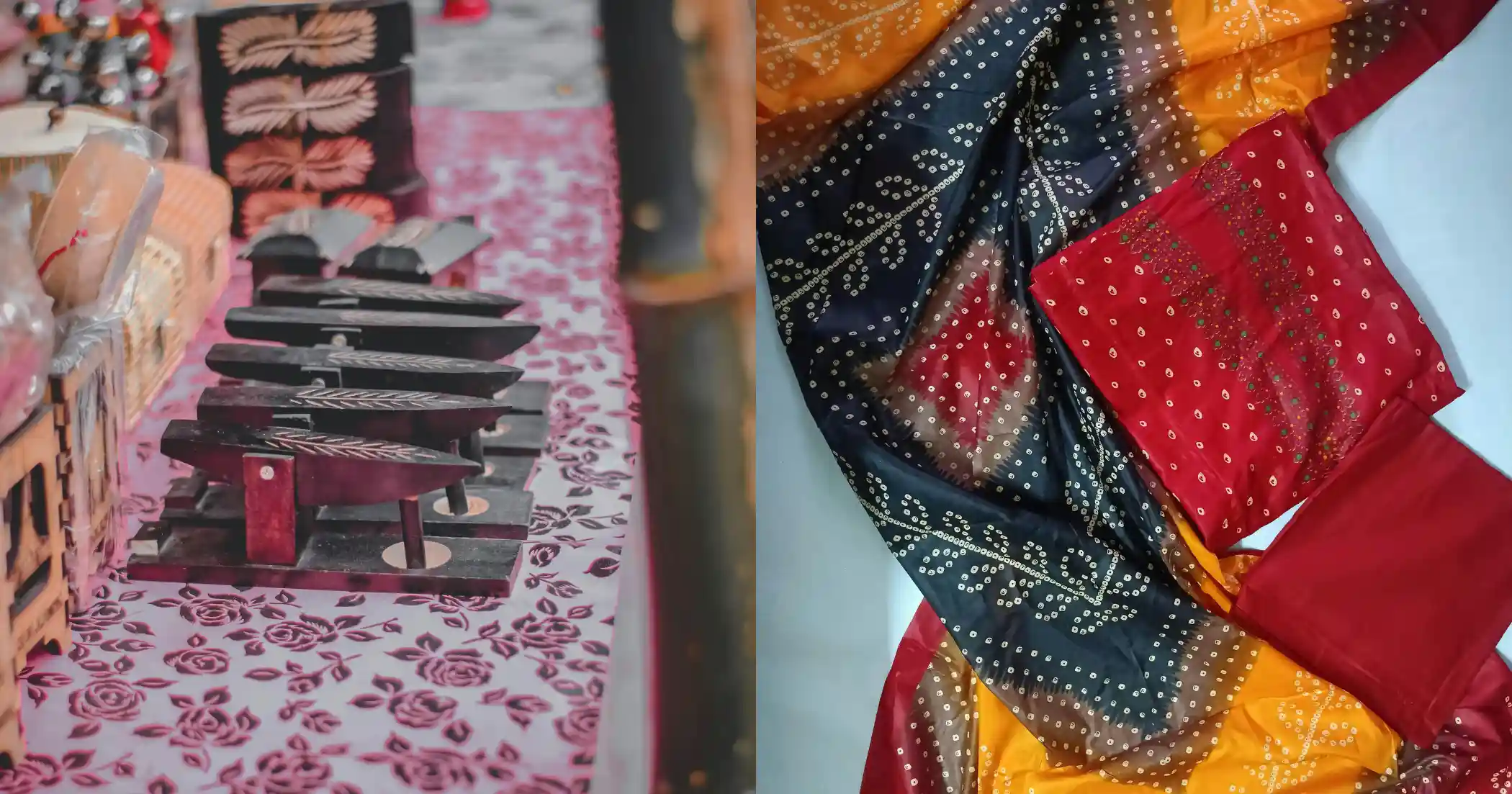
Jaipur is famous for hand block printing. If you only have time for one Jaipur textile market, make it Bapu Bazaar. Shop after shop sells fabric, kurtas, scarves and bed linen. Kishanpole Bazaar is another good place for fabric.
Two printing styles are worth knowing. Sanganeri prints are fine and floral, often on light backgrounds. Bagru prints are earthier and often use natural dyes such as indigo. Both names are registered Geographical Indications (GIs), which means they are protected names for the craft.
Use this quick check:
- Look closely. Check the pattern, the fabric and the reverse side. Small variations can occur in hand block printing, but looks alone can’t prove whether a fabric was printed by hand or by machine.
- Ask how it was made. Ask the seller to explain the printing process and the dyes. If it matters to you, ask for the details on your bill.
- Check Bandhani dots. Bandhani is tie-dye made with tiny knots. Finer dots usually mean more work, and hand-tied dots are slightly uneven.
- Wash with care. Wash new fabric on its own at first, because natural dyes may bleed.
Want to see it being made? Sanganer and Bagru sit on the edge of Jaipur, and workshops there let you watch the printers. Ask your guide about a block printing lesson.
Jewellery Checklist: Gold, Gemstones and Lac Bangles
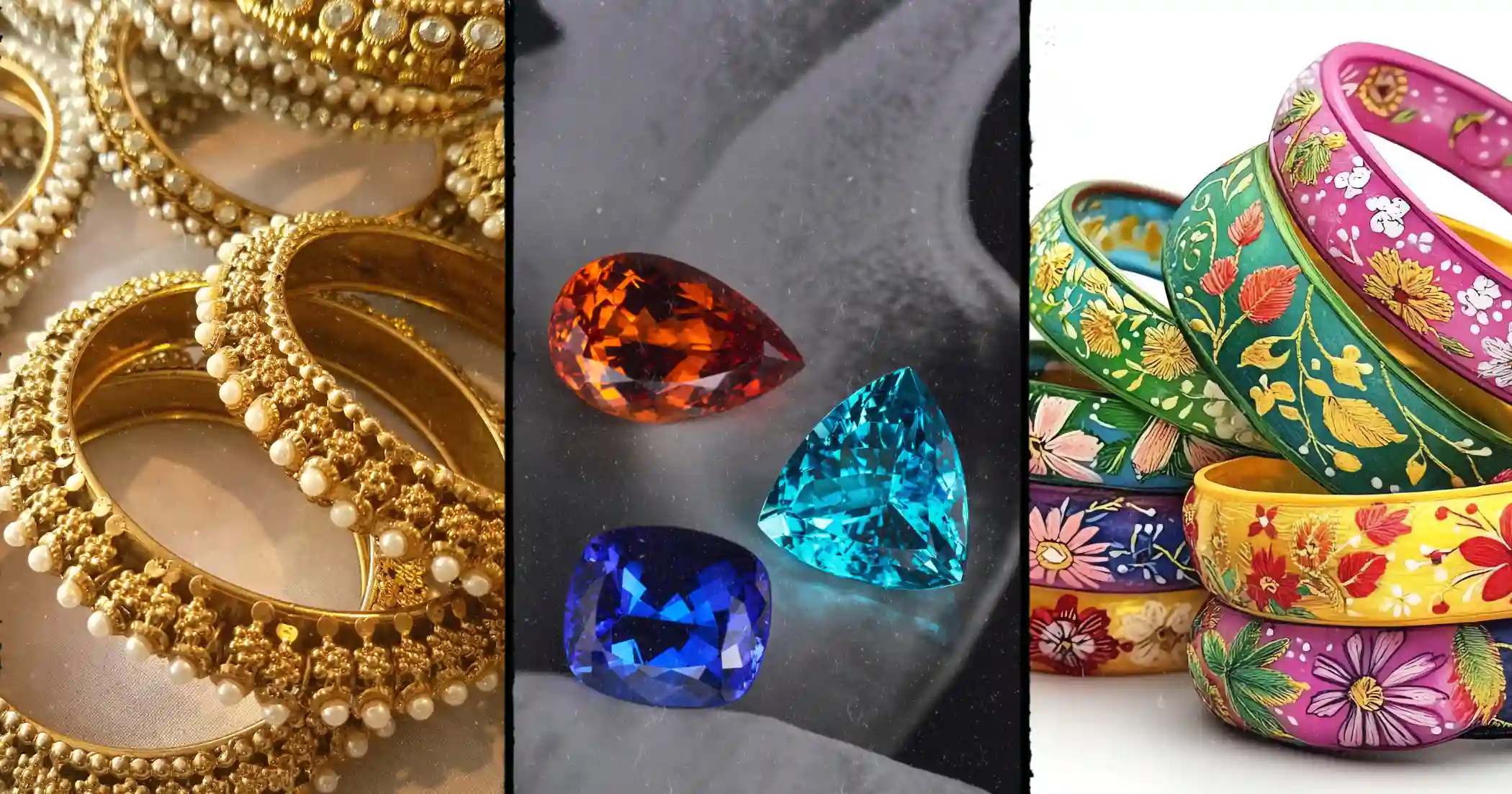
Johari Bazaar is the traditional jewellery street of the Pink City. You will see Kundan, where stones are set in gold, and Meenakari, which is colourful enamel work. Lac bangles are sold in Tripolia Bazaar and the lanes around Johari Bazaar. They are light, so they make easy gifts.
Check these before you pay:
- Gold: Check the BIS hallmark, the purity mark and the six-character HUID code. Use the “Verify HUID” option on the BIS Care app to check the code.
- Gemstones: For a costly stone, ask for a report from a recognised independent gem-testing lab. Check that it matches the stone and mentions any treatment or synthetic origin.
- Street offers: Be wary of anyone who stops you outside the shops with a bargain on stones. Cheap “gems” are often glass.
- Your bill: Ask for an itemised bill with the metal, weight and stone details.
- Comparing: For big purchases, visit at least two or three shops first.
- Rough diamonds: Skip them. They are banned from import into the UK.
Jewellery counts towards your customs allowance, so keep every receipt. If you wear valuable jewellery from home, keep receipts or photos that show you owned it before the trip.
Handicrafts and Gifts to Take Home
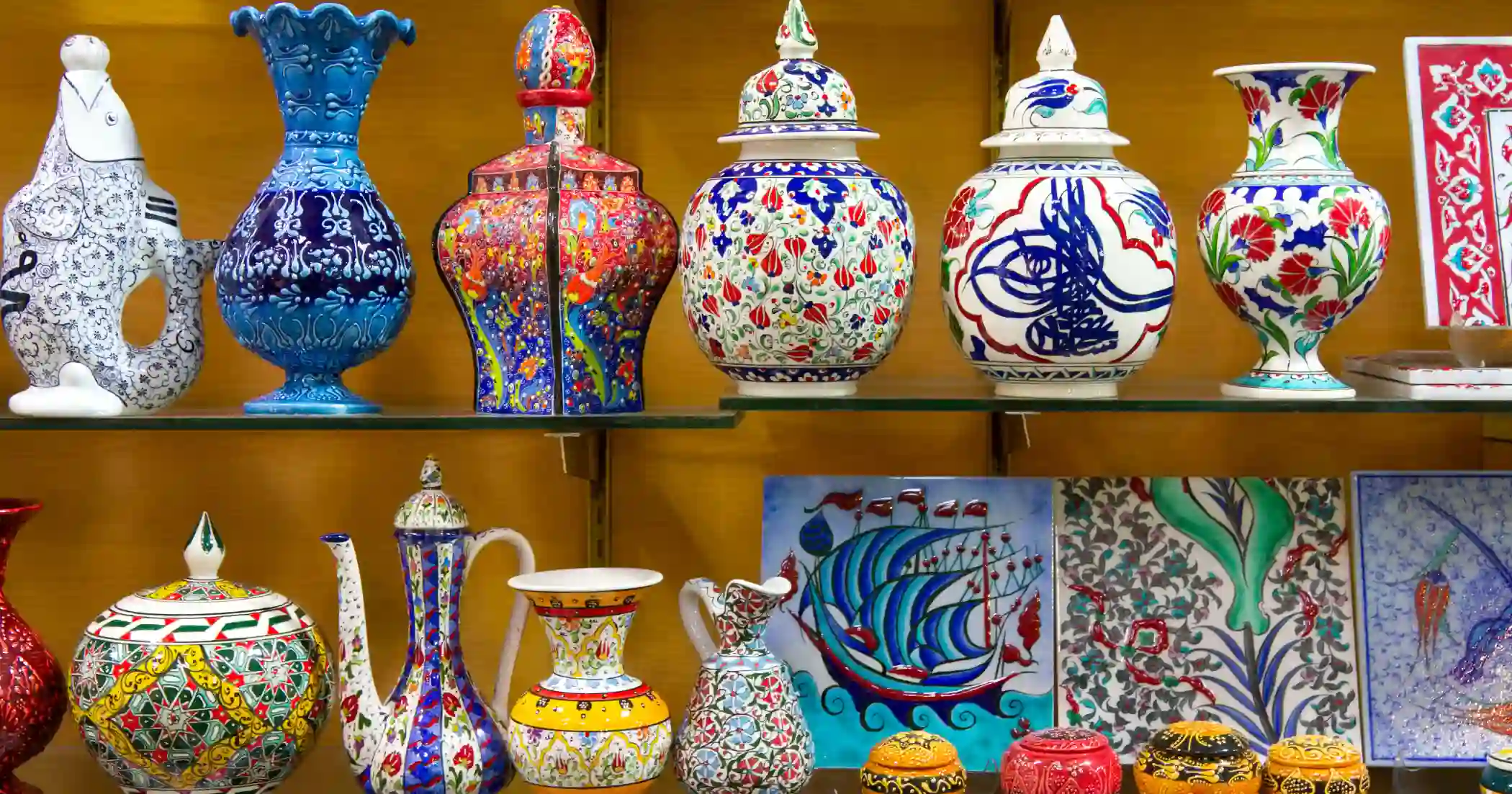
Blue pottery
Jaipur blue pottery isn’t made from ordinary clay. It uses a quartz-based mix, so it feels light. The name is a registered GI too. Ask whether the design is hand-painted, and visit a workshop if you can, to see the painters at work.
Juttis (mojaris)
These leather shoes are sold in Nehru Bazaar and Bapu Bazaar. New pairs feel stiff, so try them on and walk a few steps. Check the stitching and the sole.
Brass, marble and miniature paintings
Chandpole Bazaar is known for marble and art. Look closely at miniature paintings. Hand-painted work shows fine brush strokes, while printed copies look flat and even. Ask what the piece is painted on and with what.
Easy gifts for people at home
Lac bangles, block-print scarves, small blue pottery pieces and string puppets are light and simple to pack.
Avoid ivory and other protected wildlife products.
Bargaining and Paying in a Jaipur Shopping Market
In most stalls and small shops, bargaining is normal. Smile, stay polite and be ready to walk away. Decide your budget before you step inside.
- Compare first. Check the price of similar items in two or three shops.
- Use fixed prices as a guide. The state-run emporium and other fixed-price shops on MI Road show what a fair price looks like. Don’t haggle there, because it isn’t expected.
- Keep a record. Pay cash for small buys. Use a card for big ones, and always ask for a bill.
- Watch for steering. If a driver or guide keeps pushing one shop, be careful. Some shops pay commission and charge more because of it.
A friendly chat usually gets you further than hard bargaining. That is true in any Jaipur shopping market.
When you fly home from India, you can bring in goods worth up to £390 without paying duty or VAT. Alcohol and tobacco have separate limits. The allowance covers goods for your own use and gifts, not goods you plan to sell. The GOV.UK guide to personal goods explains the rules. A few points matter here:
- The £390 covers your whole trip. That means Jaipur, Delhi, Agra and the airport shops together. Gifts count too.
- You can’t share your allowance with another traveller.
- If you go over, you must declare your purchases and may have to pay tax and duty on the goods in that category. If a single item is worth more than £390, you may have to pay on its full value, not just the amount above.
- You can declare online up to five days before you land.
Some things are banned or restricted. Products made from endangered species are banned, and so are rough diamonds. Exotic leather goods, furs, wooden musical instruments and some tourist curios may need a CITES permit. Avoid ivory and other protected wildlife products unless you have confirmed they can legally leave India and enter the UK with the right papers.
India also controls the export of antiquities. Items over 100 years old generally can’t leave the country without a permit, under the Antiquities and Art Treasures Act, 1972. If a seller calls a piece an antique, ask for its age, origin and export papers. Check the rules with the Archaeological Survey of India before you buy.
Getting Your Purchases Home
Good shopping can still go wrong at the airport. Plan this part early.
- Check your baggage allowance. Quilts, pottery and marble add weight quickly.
- Wrap fragile pieces well. Pack pottery in the middle of your case, surrounded by clothes. Or ask the shop to pack it properly.
- Ask about shipping for large items. Get a written quote, the courier’s name, tracking details and insurance terms.
- Expect possible UK charges on parcels. VAT or duty may apply, depending on the goods, their value and the rules at the time. Check GOV.UK before you send anything.
- Keep your receipts. You may need them at customs.
If you are unsure whether something is allowed, ask your guide before you buy it.
A Smart Half-day Route with Your Guide
The walled Pink City is the main shopping area in Jaipur. Its main bazaars sit close together, and a guide can often fit several of them into half a day, depending on your pace and the opening hours. Here is one easy order:
- Start near Hawa Mahal in the late morning, when shops are opening and the lanes are calmer.
- Walk to Johari Bazaar for jewellery.
- Move on to Tripolia Bazaar and Bapu Bazaar for bangles, brassware and textiles.
- Finish at Nehru Bazaar for juttis.
- End on MI Road, where fixed prices help you check what you saw earlier.
Tell your Chai Rose Travels guide your budget, interests and must-buys before you start. Your guide can adjust the route to suit your pace, the opening hours and what you want to buy, and can help you avoid pushy shops.
Beyond the Main Stops
Locals also shop at Chandpole Bazaar for marble and art, Kishanpole Bazaar for fabric and Ramganj Bazaar for spices. These lanes are busier and less set up for visitors, so go with your guide on a first trip.
Shop Jaipur with Chai Rose Travels
We plan tailor-made, escorted tours of India for UK travellers. Jaipur is a key stop on the Golden Triangle, and shopping fits easily into the plan. You can read more about Jaipur on our site. Our India Art and Culture Tour also covers crafts and heritage in Jaipur, Mathura and Agra.
When you plan your trip, tell us your budget, your interests and anything you hope to buy. We can then leave time in your days for the right bazaars.
Frequently asked questions
Q. How much can I bring back from India to the UK?
Ans. When you arrive by air, you can bring in goods worth up to £390 per person without paying duty or VAT. That covers your whole trip. Declare anything over your allowance, and check GOV.UK for the latest rules.
Q. Is bargaining expected in Jaipur?
Ans. Yes, in most bazaars and small shops. Fixed-price stores don’t expect it. Stay polite and be ready to walk away.
Q. Is it safe to buy gemstones in Johari Bazaar?
Ans. It can be, if you take care. Use an established shop, ask for an independent lab certificate and get an itemised bill. Avoid street offers.
Q. Can tourists claim a tax refund on shopping?
Ans. Not at the moment, as far as we can confirm. India’s law allows for a tourist refund, but we couldn’t confirm a working scheme. Don’t count on one, and always ask for a proper bill.
Q. Can I take antiques home?
Ans. Not if the item counts as an antiquity, which generally means over 100 years old, unless you hold an export permit. Ask for its age and export papers, or choose a new piece instead.
Q. Can I use my UK card in Jaipur?
Ans. Larger shops often take cards, but small stalls may prefer cash. Check your bank’s foreign transaction fees. If a card machine offers to charge you in pounds, choose Indian rupees instead, because the conversion rate is often worse.
Q. How can I ship Jaipur handicrafts to the UK?
Ans. Ask the shop for a written quote, and check the insurance and tracking. Confirm the declared value too. Find out about possible UK import charges before you pay.